Kitchen Layout & Flow: The Schematic Design Phase Explained
- Chloe Browning

- May 28
- 4 min read
Updated: Jun 15
Why Function Is What Actually Makes or Breaks a Kitchen
Once the overall kitchen design direction and aesthetic are defined, we move into one of the most important phases of the kitchen renovation process: schematic design.
This is where the kitchen stops being inspiration and starts becoming functional.
At this stage, we focus on:
kitchen layout
flow
appliance placement
storage planning
cabinet organization
and overall usability
And honestly, this phase is what determines whether a kitchen feels effortless to use or frustrating every single day.
The Kitchen We’re Designing
Like many builder-grade kitchens, the original space lacked thoughtful storage, strong functionality, and an intentional overall layout. The kitchen felt disconnected from the rest of the home, with limited organization and very little visual interest or architectural character.
This kitchen is relatively small, which actually makes schematic kitchen planning even more important.
Their main goals were:
more functional storage
a more elevated and intentional design
and a dedicated dining area that felt integrated into the kitchen itself
Because the kitchen footprint is relatively small, schematic planning became especially important. Every decision needed to maximize functionality without making the space feel crowded.
We explored two initial layout options (see plans below).
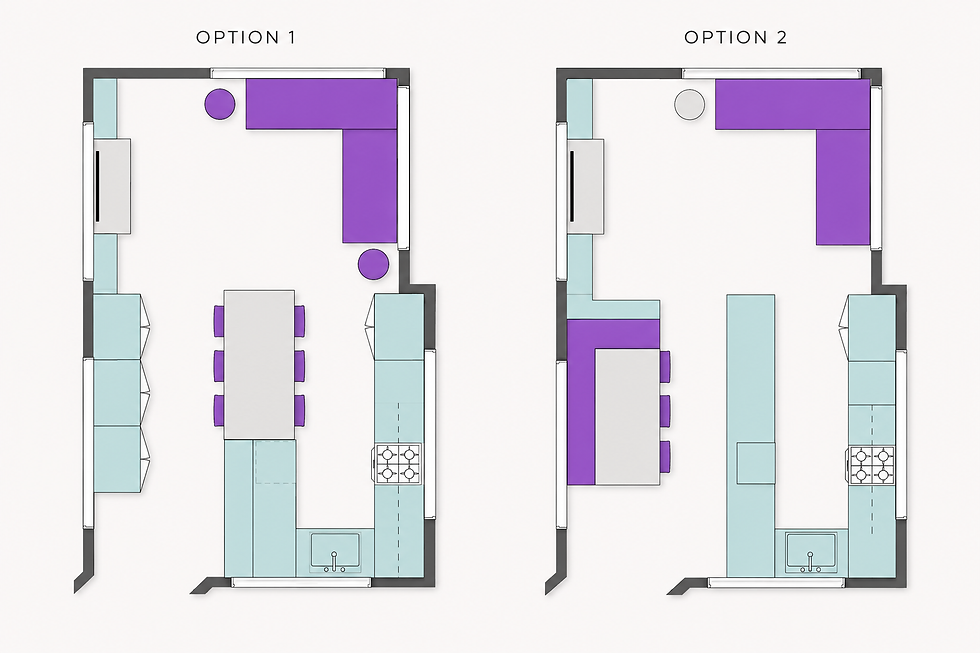
Option 1 - Featured a dining-height island with tall storage cabinetry, creating a more open layout with increased vertical storage.
Option 2 - Explored a built-in dining booth with additional lower cabinetry storage.
Ultimately, we moved forward with Option 1 because it allowed for better circulation throughout the kitchen while maximizing overall storage.
The First Thing I Think About Is Flow
Before I think about kitchen finishes, I think about how the space will function on a daily basis.
How will someone move through the kitchen?
Where will prep happen?
What areas will experience the most traffic?
Are cooking, cleanup, coffee, and refrigerator zones competing with each other?
Does anything feel tight, awkward, or inefficient?
A well-designed kitchen should feel natural to move through.
You shouldn’t have to work around appliance doors, cross through someone else’s workspace, or realize there’s nowhere to set something down while cooking.
Appliance Placement Comes Earlier Than Most People Think
One of the first things we finalize during schematic kitchen design is the appliance package.
This is because kitchen appliances come in many different:
sizes
depths
installation specifications
And these details directly affect the cabinetry and kitchen layout.
For example:
refrigerator depth affects aisle clearances
vent hood requirements affect cabinetry and ceiling design
wall oven dimensions impact surrounding storage opportunities
This is why appliances need to be integrated into the kitchen design early. Waiting too long to finalize them often leads to revisions later because something no longer fits correctly.
A few important examples we plan around:
Sink + Dishwasher Placement
The dishwasher should almost always be next to the sink.
This creates:
easier dish transfer
better cleanup flow
more functional unloading
Prep Space Next to the Range
One of the biggest layout mistakes is not leaving enough countertop landing space beside a cooktop or range.
When cooking, you need immediate space for:
ingredients
utensils
plating
Without this, even beautiful kitchens become frustrating to use.
Storage Planning Is More Personal Than Most People Realize
Storage planning is one of the biggest parts of schematic kitchen design—and one of the most overlooked. Every client stores things differently, so before I design kitchen cabinetry, I work closely with clients to understand exactly what they need to store.
This can vary dramatically depending on lifestyle.
Are they huge coffee people with multiple coffee appliances?
Do they buy bulk groceries?
Are they wine collectors or mixologists with large glassware collections?
Do they need hidden appliance storage?
Do they cook daily or minimally?
We also study:
how they currently organize their kitchen
what frustrates them
what feels disorganized
and what never has enough space
Sometimes clients realize they’ve adapted to functionality issues they didn’t even recognize were causing frustration.
Common Kitchen Layout Mistakes I See
Oversizing islands
Large islands often hurt circulation more than they help.
Prioritizing symmetry over usability
Perfect symmetry sometimes creates awkward storage and wasted functionality.
Not enough countertop landing space
Especially beside appliances.
Finalizing finishes before layout
This often leads to revisions, compromises, and unnecessary costs later.
What Comes Next
Once the schematic kitchen layout is resolved, we move into design development. This is where the kitchen starts becoming more visual as we finalize cabinetry finishes, stone slabs, tile, hardware, lighting, and detailed elevations.
At this point, the kitchen already functions well—now we focus on layering in the final design details that bring the space together visually.
Final Thought
The schematic design phase is where the kitchen truly takes shape.
Before any final materials are selected, we focus on creating a layout that functions well, flows naturally, and supports how the clients actually live day to day.
Beautiful finishes can elevate a kitchen, but thoughtful planning is what makes it feel effortless to use long-term.


Comments